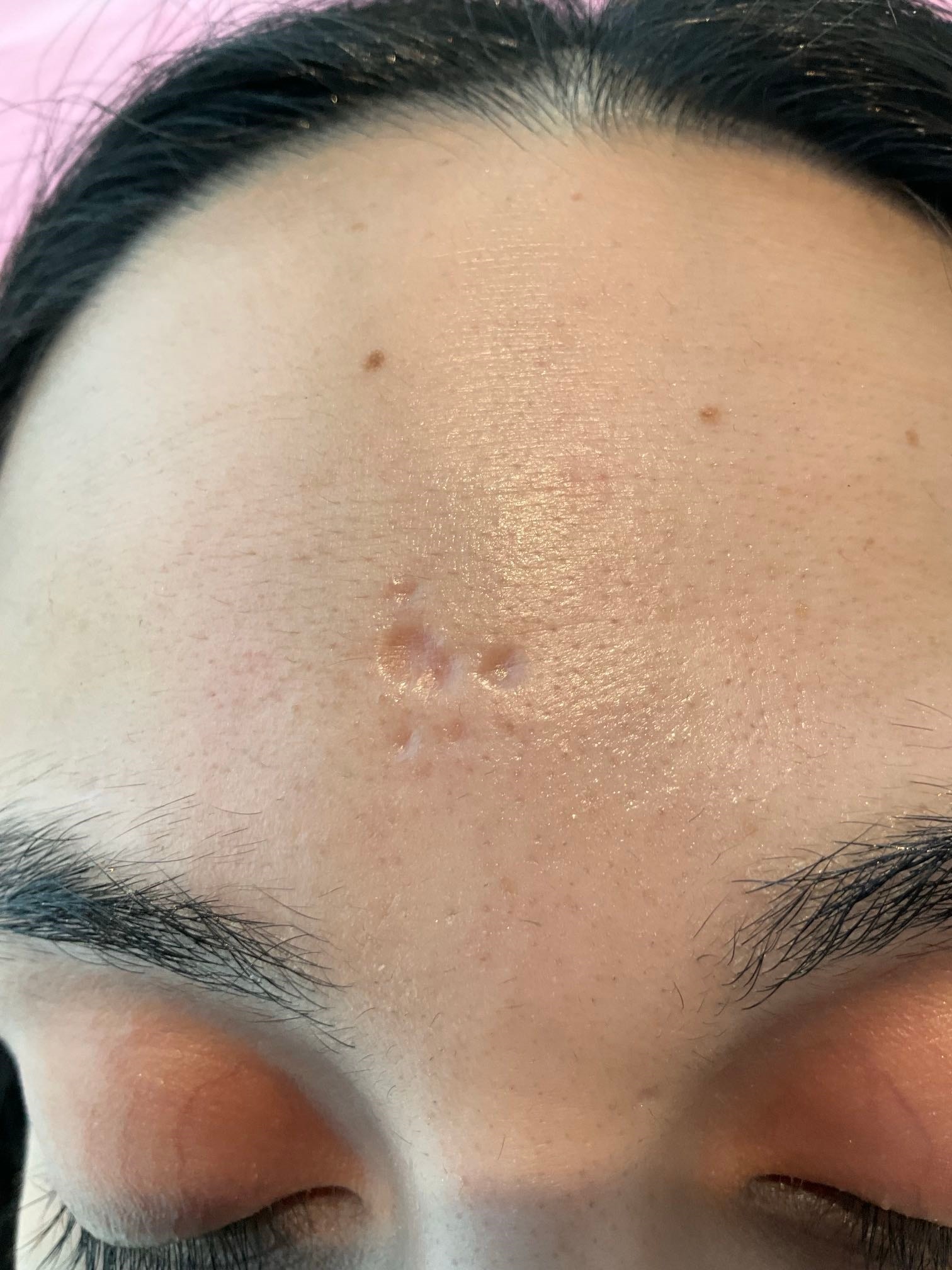
Understanding Boil-Related Forehead Scarring
Boil-like pimples, cystic acne lesions, and deep inflammatory breakouts develop when pores become congested with excess oil, dead skin cells, and inflammatory debris. These lesions form deeper within the skin than ordinary pimples and may persist for extended periods, often leaving behind post-inflammatory scarring, textural irregularities, and uneven skin tone.
Contributing factors can include excess sebum production, hormonal influences, inflammation, genetics, environmental factors, impaired skin barrier function, and previous skin trauma or irritation. For some individuals, recurrent breakouts compound the visible changes over time — making targeted, multi-modal skin remodelling an important part of any treatment plan.
Why scarring persists
When a deep inflammatory lesion heals, the skin's collagen repair process can be disrupted — resulting in depressed, raised, or textured scarring. Addressing this requires treatments that stimulate new collagen production from within the dermis, not just surface-level resurfacing. Research into fibroblast-stimulating therapies, including plasma energy devices, suggests that controlled micro-injury can initiate a wound-healing cascade that promotes dermal remodelling over time.
A Complex Skin History
The client featured in this internal model case study had a long history of skin concerns and had previously undergone numerous cosmetic and aesthetic procedures before commencing treatment at Plasma Pen Clinic. These prior treatments included various injectable and energy-based procedures.
The client also reported experiencing complications associated with a previous cosmetic treatment involving vascular compromise following dermal filler placement, which required medical management. She had also undergone several laser treatments over the years but felt that her primary skin concerns had not improved to the extent she had hoped.
It is important to note that past procedures, treatment complications, and individual healing responses are highly specific to each patient and should not be interpreted as representative of any treatment modality.
Treatment Objectives
Following consultation and skin assessment, a personalised four-month treatment plan was developed to address the visible skin changes remaining after the boil infection had healed. The treatment goals included:
- Improving the appearance of post-inflammatory scarring on the forehead
- Stimulating collagen and elastin production within the dermis
- Reducing visible textural irregularities and surface roughness
- Enhancing overall skin quality, clarity, and skin tone
- Encouraging sustained natural skin remodelling beyond the active treatment period
The Four-Month Treatment Plan
Over approximately four months, the client underwent a carefully staged combination of three complementary treatments. Each modality was sequenced to allow adequate healing time between sessions while maintaining consistent momentum in the skin's remodelling response:
Plasma Pen Fibroblast Therapy
Plasma Pen was incorporated as the primary remodelling treatment. Using a controlled plasma arc, the device creates precise micro-injuries at the skin's surface, triggering a fibroblast activation response that promotes new collagen and elastin synthesis within the dermis. For this client, treatment was focused on the forehead scar area, with the goal of supporting skin renewal, improving visible texture, and addressing the structural changes associated with previous deep inflammatory lesions. Sessions were spaced to allow full healing before the next treatment.
Skin Needling (Microneedling)
Skin needling was introduced at appropriate intervals within the four-month plan to support collagen induction and complement the deeper remodelling work of Plasma Pen. By creating controlled micro-channels in the skin, needling encourages the production of new collagen and elastin while also enhancing the absorption of topical actives applied post-treatment. Objectives included improving the appearance of textural irregularities, supporting skin regeneration, and assisting with the visible appearance of post-boil scarring.
Professional Chemical Peels
Professional chemical peel treatments were incorporated at strategic points in the plan to assist with skin resurfacing and accelerate cellular turnover. Peels were selected based on the client's skin tolerance and treatment stage, with the aim of improving skin brightness, reducing surface congestion, and enhancing overall skin clarity. When used in combination with Plasma Pen and skin needling, peels can support a more progressive improvement in skin quality by addressing the outer layers while the deeper remodelling work continues.
All cosmetic procedures involve limitations, risks, variable healing responses, and differing outcomes. The sequencing and number of sessions within this plan were tailored to this individual client and should not be interpreted as a standard protocol. A professional consultation is essential to determine whether any treatment is appropriate for your specific circumstances.
Observed Outcomes at Four Months
At the four-month review, visible improvements were observed in the appearance of the skin in the treated forehead area. Changes noted included a reduction in the visible depth and texture of scar tissue associated with the previous boil infection, improved overall skin smoothness, a more even-looking skin tone, and a general improvement in skin quality and clarity.
The client reported being pleased with the progress achieved within the four-month timeframe, particularly given the limited improvement she had experienced from previous aesthetic procedures over a number of years.
These observations relate to the cosmetic appearance of the skin only. This case study does not demonstrate treatment of the original infection, nor does it imply prevention of future boil occurrences.
Important note
The improvements observed in this case study are associated with — not definitively caused by — the treatments described. Individual healing responses, skin type, age, lifestyle, medical history, and skincare adherence all influence outcomes. Results cannot be predicted or guaranteed. The before and after photographs document one individual's experience and are not representative of typical results.
Why Further Improvement May Still Occur
The results documented at the four-month mark should be considered an interim finding rather than a final outcome. The biological processes involved in collagen production and tissue remodelling are known to continue for many months following treatment — in some cases, up to 12 months or beyond. For this reason, additional changes in the appearance of the scar and surrounding skin may continue to develop well after the active treatment period has concluded.
Potential ongoing changes may include:
- Continued refinement of skin texture as new collagen matures
- Further softening and flattening in the appearance of scar tissue
- Progressive strengthening of the dermal matrix
- Additional improvements in overall skin quality and surface clarity
Future outcomes cannot be guaranteed and will vary depending on individual healing responses, age, lifestyle factors, medical history, skincare adherence, and other biological variables. The continuation of a home skincare routine and sun protection is important in supporting long-term results.
The Science Behind Combination Skin Remodelling
The rationale for combining Plasma Pen, skin needling, and chemical peels is grounded in the complementary mechanisms of each modality. Plasma Pen Fibroblast Therapy works primarily at the dermal level, stimulating fibroblast activity and triggering a wound-healing cascade that promotes new collagen and elastin synthesis. Skin needling supports this process by creating additional micro-channels that further activate collagen induction pathways. Chemical peels address the epidermal layer, accelerating cellular turnover and improving surface clarity.
When used in a carefully staged sequence, these three modalities can address different layers of the skin simultaneously — supporting both surface-level improvement and deeper structural remodelling. This layered approach is particularly relevant for post-inflammatory scarring, where changes in both the epidermis and dermis contribute to the visible appearance of the scar.
Clinical context
Research into fibroblast-stimulating therapies and collagen induction techniques supports the principle that multi-modal approaches may offer advantages over single-modality treatment for complex scar presentations. However, the evidence base for plasma energy devices specifically is still developing, and individual responses vary considerably. This case study does not constitute clinical evidence and should not be interpreted as such.
A Measured Perspective on Combination Treatments
This internal case study highlights the potential value of a comprehensive, staged treatment plan rather than relying on a single procedure alone. For this particular client, a carefully sequenced combination of Plasma Pen treatments, skin needling, and chemical peels over four months was associated with visible improvements — after a history of multiple previous aesthetic interventions that had not delivered her desired outcome.
Importantly, it would be inappropriate to conclude that these treatments will produce similar results for everyone. All cosmetic procedures involve limitations, risks, variable healing responses, and differing outcomes. The results observed here reflect one individual's experience and cannot be generalised. A professional consultation is essential to determine whether any treatment is appropriate for your specific circumstances.
Conclusion
At the four-month review, this client demonstrated encouraging progress in skin texture, clarity, and overall skin appearance. After years of pursuing various treatment options with limited success, she reported feeling more positive about the direction of her skin health and cosmetic goals.
As collagen remodelling continues beyond the active treatment period, further improvement may occur over the coming months. However, outcomes remain highly individual and cannot be predicted with certainty. At Plasma Pen Clinic, all treatment plans are tailored to the individual's skin concerns, medical history, and goals — and a thorough consultation is always the first step.
Before & After — Four-Month Review
The following clinical photographs document the treated forehead area at baseline and at the four-month review. Images are provided for educational purposes only. Individual results vary.
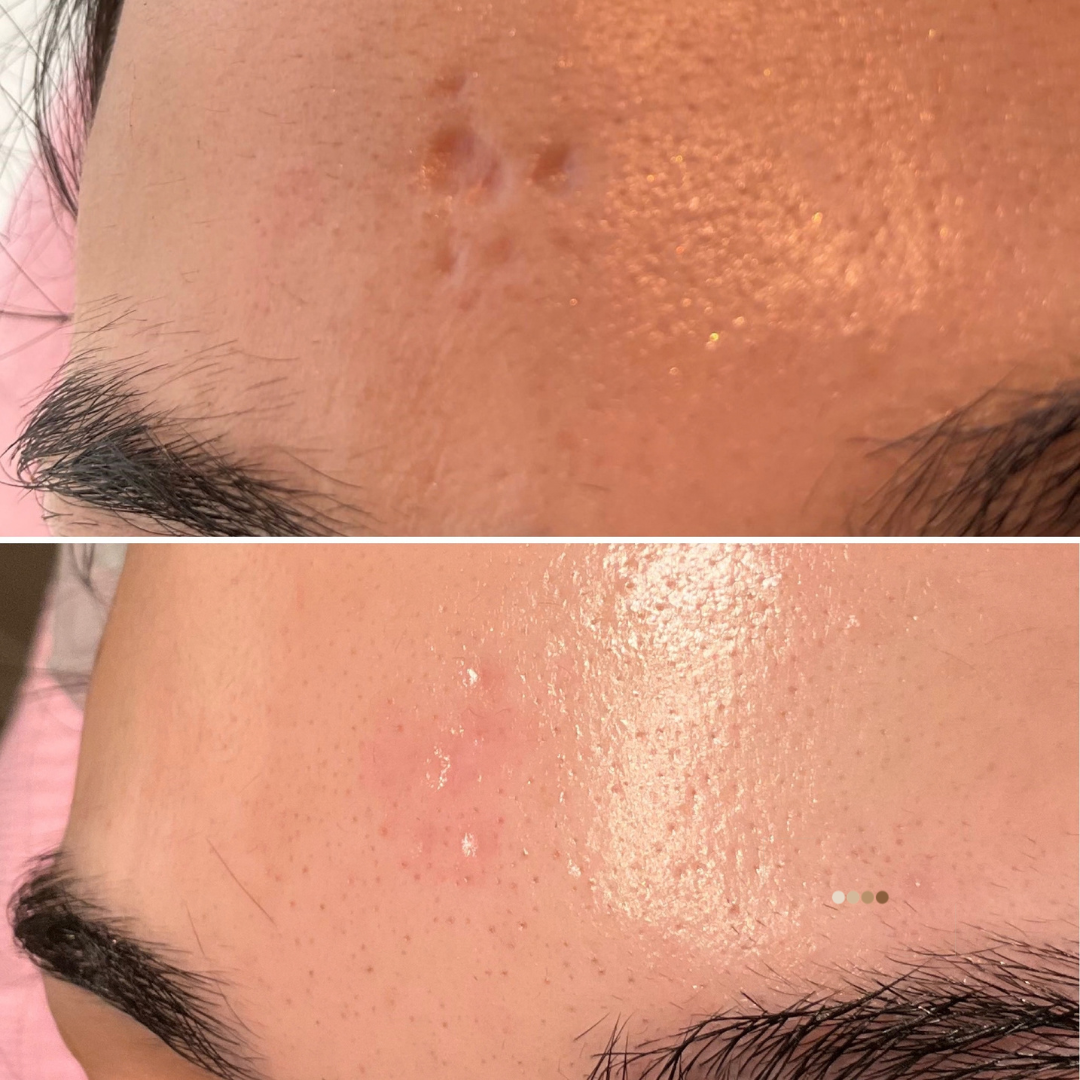
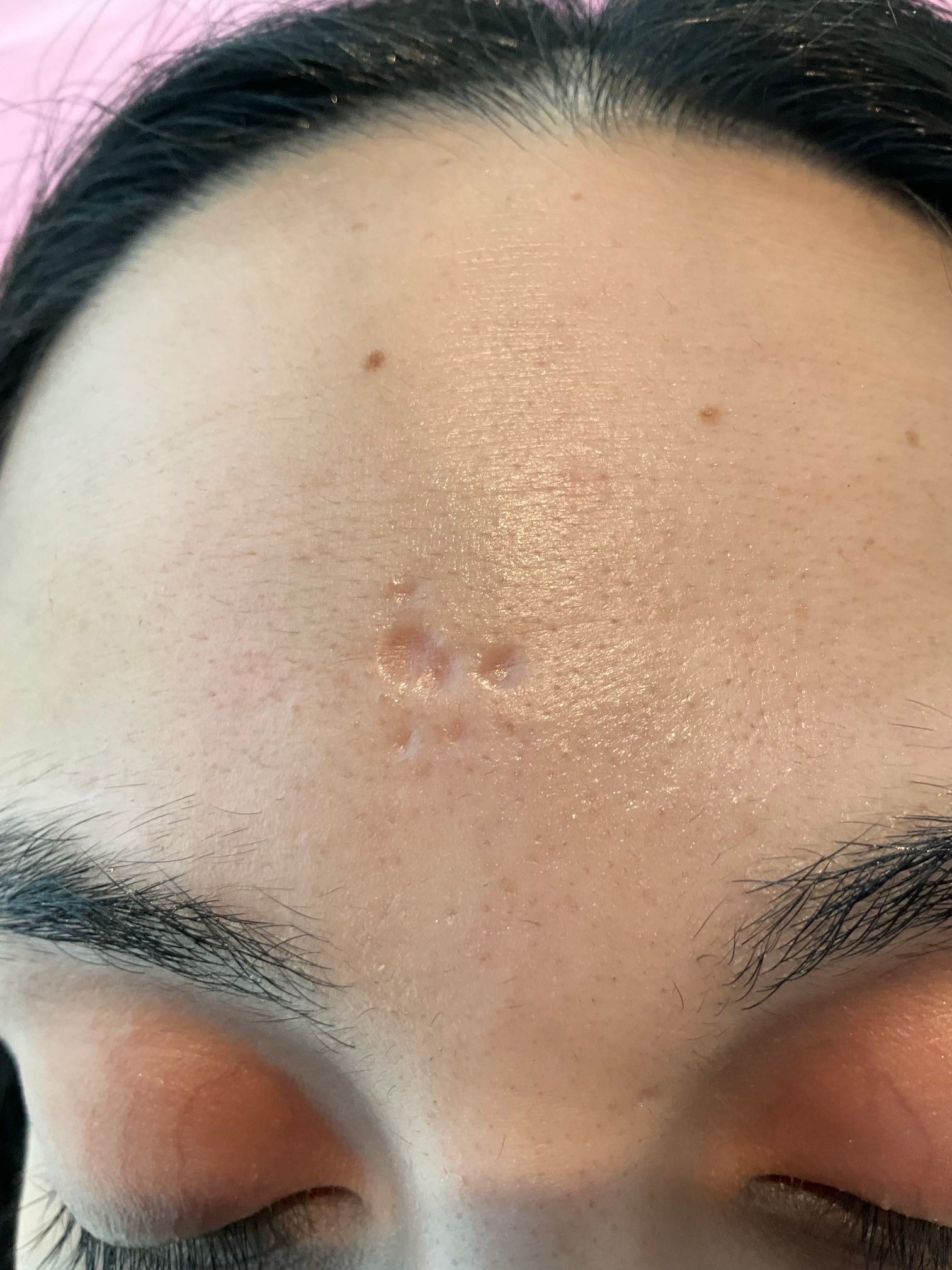
Disclaimer: These images are from an internal model client and are provided for educational purposes only. They do not constitute a guarantee of treatment outcomes. Individual results vary, and all procedures carry risks.